
In this present work A single server fixed batch queuing method is considered with fixed arrival and service occurs according to poisson process, under multiple vacation and system reset. Further, It is supposed that the vacation has an exponential distribution and that the system reset happens as a Poisson process. In this model, the system starts with k customers, and the server immediately begins service for a batch of size k. When a service is finished and there are fewer than k customers in line, the server takes a vacation. When the vacation ends, If the count of customers is still insufficient, the server continues taking multiple vacations of average length 1/α. If there are k or more customers, the server selects the first k customers and starts the next batch service. The system also considers the possibility of a system reset. Whenever a reset occurs, all customers in the system are removed, and the server goes on a vacation. Numerical experiments and graphical representations are used to study the mean and variance change with different Different rates for service rate, batch size, vacation rate, and reset rate have been considered in the present study. It has been observed that the developed model is helpful in the analysis of the performance of automatic service systems facing periodic disruptions.
| Published in | Applied and Computational Mathematics (Volume 15, Issue 5) |
| DOI | 10.11648/j.acm.20261505.15 |
| Page(s) | 198-205 |
| Creative Commons |
This is an Open Access article, distributed under the terms of the Creative Commons Attribution 4.0 International License (http://creativecommons.org/licenses/by/4.0/), which permits unrestricted use, distribution and reproduction in any medium or format, provided the original work is properly cited. |
| Copyright |
Copyright © The Author(s), 2026. Published by Science Publishing Group |
Deterministic Arrival, Fixed Batch Service, System Reset, Vacation, Variance
|
| 5 | 20 |
|---|---|---|---|
| 0.006757 | 0.004887 | 0.003825 |
| 0.004829 | 0.003216 | 0.002391 |
| 0.002726 | 0.001727 | 0.001255 |
| 0.001430 | 0.000884 | 0.000635 |
| 0.000729 | 0.000445 | 0.000318 |
| 0.000368 | 0.000223 | 0.000159 |
| 0.000184 | 0.000112 | 0.000080 |
| 0.000092 | 0.000056 | 0.000040 |
| 0.000046 | 0.000028 | 0.000020 |
| 0.000023 | 0.000014 | 0.000010 |
| 0.000012 | 0.000007 | 0.000005 |
| 0.0000006 | 0.000003 | 0.000002 |
| 0.0000000 | 0.000002 | 0.000001 |
| 0.0000000 | 0.000001 | 0.000000 |
| 0.283785 | 0.286652 | 0.288250 |
| 0.258695 | 0.263700 | 0.266391 |
| 0.237190 | 0.242664 | 0.245515 |
| 0.217844 | 0.223419 | 0.226309 |
| 0.201325 | 0.164371 | 0.209967 |
| 0.100663 | 0.103503 | 0.104983 |
| 0.050331 | 0.051752 | 0.052492 |
| 0.025166 | 0.025876 | 0.026246 |
| 0.012583 | 0.012938 | 0.013123 |
| 0.006291 | 0.006469 | 0.006561 |
| 0.003146 | 0.003234 | 0.003281 |
| 0.001573 | 0.001617 | 0.001640 |
| 0.000786 | 0.000809 | 0.000820 |
| 0.000393 | 0.000404 | 0.000410 |
| 0.000197 | 0.000202 | 0.000205 |
| 0.000098 | 0.000101 | 0.000103 |
| 0.000049 | 0.000051 | 0.000051 |
| 0.000025 | 0.000025 | 0.000026 |
| 0.000012 | 0.000013 | 0.000013 |
| 0.000006 | 0.000006 | 0.000006 |
| 0.000000 | 0.000003 | 0.000003 |
| 0.000000 | 0.0000000 | 0.000000 |
|
|
|
|
|---|---|---|---|
| 0.013588 | 0.009357 | 0.006757 |
| 0.009812 | 0.006698 | 0.004829 |
| 0.005576 | 0.003785 | 0.002726 |
| 0.002937 | 0.001987 | 0.001430 |
| 0.001502 | 0.001014 | 0.000729 |
| 0.000758 | 0.000511 | 0.000368 |
| 0.000381 | 0.000257 | 0.000184 |
| 0.000191 | 0.000128 | 0.000092 |
| 0.000095 | 0.000064 | 0.000046 |
| 0.000048 | 0.000032 | 0.000023 |
| 0.000024 | 0.000016 | 0.000012 |
| 0.000012 | 0.000008 | 0.000006 |
| 0.000006 | 0.000004 | 0.00000 |
| 0.000003 | 0.000002 | 0.00000 |
| 0.000001 | 0.000000 | 0.00000 |
| 0.00000 | 0.000000 | 0.00000 |
| 0.317940 | 0.296785 | 0.283785 |
| 0.330925 | 0.286119 | 0.258695 |
| 0.335497 | 0.274423 | 0.237190 |
| 0.265184 | 0.261199 | 0.217844 |
| 0.132592 | 0.130600 | 0.201325 |
| 0.041937 | 0.065300 | 0.100663 |
| 0.020969 | 0.032650 | 0.050331 |
| 0.010484 | 0.016325 | 0.025166 |
| 0.005242 | 0.008162 | 0.012583 |
| 0.002621 | 0.004081 | 0.006291 |
| 0.001311 | 0.002041 | 0.003146 |
| 0.000655 | 0.001020 | 0.001573 |
| 0.000328 | 0.000510 | 0.000786 |
| 0.000164 | 0.000255 | 0.000393 |
| 0.000082 | 0.000128 | 0.000197 |
| 0.000041 | 0.000064 | 0.000098 |
| 0.000020 | 0.000032 | 0.000049 |
| 0.000010 | 0.000016 | 0.000025 |
| 0.000005 | 0.000008 | 0.000012 |
| 0.000003 | 0.000004 | 0.000006 |
| 0.000001 | 0.000002 | 0.000003 |
| 0.000000 | 0.000001 | 0.000002 |
|
|
|
|
|---|---|---|---|
| 0.002707 | 0.001212 | 0.000597 |
| 0.001702 | 0.000682 | 0.000304 |
| 0.000838 | 0.000298 | 0.000120 |
| 0.000381 | 0.000120 | 0.000043 |
| 0.000168 | 0.000046 | 0.000015 |
| 0.000073 | 0.000018 | 0.000005 |
| 0.000031 | 0.000007 | 0.000002 |
| 0.000013 | 0.000003 | 0.000001 |
| 0.000006 | 0.000001 | 0.000000 |
| 0.000002 | 0.000000 | 0.000000 |
| 0.000001 | 0.000000 | 0.000000 |
| 0.410828 | 0.504040 | 0.573134 |
| 0.260729 | 0.257197 | 0.247769 |
| 0.135429 | 0.133767 | 0.108342 |
| 0.115734 | 0.071968 | 0.048569 |
| 0.082668 | 0.041022 | 0.022933 |
| 0.035429 | 0.015383 | 0.007647 |
| 0.015184 | 0.005769 | 0.002549 |
| 0.006507 | 0.002163 | 0.000850 |
| 0.002789 | 0.000811 | 0.000283 |
| 0.001195 | 0.000304 | 0.000094 |
| 0.000512 | 0.000114 | 0.000031 |
| 0.000220 | 0.000043 | 0.000010 |
| 0.000094 | 0.000016 | 0.000003 |
| 0.000040 | 0.000006 | 0.000001 |
| 0.000017 | 0.000002 | 0.00000 |
| 0.000007 | 0.000000 | 0.00000 |
|
|
|
|
|---|---|---|---|
| 0.008462 | 0.009666 | 0.010562 |
| 0.005443 | 0.005699 | 0.005784 |
| 0.002722 | 0.002582 | 0.002412 |
| 0.001250 | 0.001064 | 0.000908 |
| 0.000554 | 0.000419 | 0.000325 |
| 0.000241 | 0.000162 | 0.000113 |
| 0.000104 | 0.000062 | 0.000039 |
| 0.000045 | 0.000023 | 0.000013 |
| 0.000019 | 0.000009 | 0.000004 |
| 0.000008 | 0.000003 | 0.000001 |
| 0.000003 | 0.000001 | 0.000000 |
| 0.000002 | 0.000000 | 0.000000 |
| 0.292310 | 0.298330 | 0.302810 |
| 0.275149 | 0.286325 | 0.294377 |
| 0.257184 | 0.270185 | 0.279231 |
| 0.239183 | 0.252725 | 0.262007 |
| 0.223238 | 0.237048 | 0.246508 |
| 0.095674 | 0.088893 | 0.082169 |
| 0.041003 | 0.033335 | 0.027390 |
| 0.017573 | 0.012501 | 0.009130 |
| 0.007531 | 0.004688 | 0.003043 |
| 0.003228 | 0.001758 | 0.001014 |
| 0.001383 | 0.000659 | 0.000338 |
| 0.000593 | 0.000630 | 0.000113 |
| 0.000254 | 0.000093 | 0.000038 |
| 0.000109 | 0.000035 | 0.000013 |
| 0.000047 | 0.000013 | 0.000004 |
| 0.00002 | 0.000005 | 0.000000 |
μ=10 | μ=15 | μ=20 | |
|---|---|---|---|
Ls | 3.589551 | 3.491997 | 3.390468 |
Lq | 3.545906 | 3.421560 | 3.332503 |
Vx | 2.085065 | 2.558477 | 2.713219 |
K=3 | K=4 | K=5 | |
|---|---|---|---|
Ls | 2.980721 | 3.050335 | 3.507639 |
Lq | 2.866939 | 2.955214 | 3.421711 |
Vx | 1.171046 | 2.201029 | 2.450792 |
ν=2 | ν=3 | ν=4 | |
|---|---|---|---|
Ls | 1.401273 | 1.056446 | 0.771162 |
Lq | 1.371768 | 1.044478 | 0.765727 |
Vx | 3.155450 | 1.859419 | 1.282323 |
α=3 | α=4 | α=5 | |
|---|---|---|---|
Ls | 3.475731 | 3.449276 | 3.419129 |
Lq | 3.381694 | 3.350901 | 3.318324 |
Vx | 1.393493 | 0.889793 | 0.537158 |
Ls | Mean Number of the Customers in the System |
Lq | Mean Number of the Customers in the Queue |
Vx | Variance |
| [1] | Ayyappan, G., Devipriya, G., & Muthu Ganapathi Subramanian, A. (2014). Analysis of Single Server Fixed Batch Service Queueing System under Multiple Vacations with Gated Service. International Journal of Computer Applications, 89(5), 15-19. |
| [2] | Bailey, N. T. J., (1954), On queueing process with bulk service, Journal of Royal Statistical Society series, B16, 80-97. |
| [3] | Doshi, B. T., (1986), Queueing systems with vacations- A survey, Queueing Systems 1, 29-66. |
| [4] | Dshalalow, J. H. and Yellen, J., (1996), Bulk input queues with quorum and multiple vacations, Mathematical Problems in Engineering, 2: 2, 95-106. |
| [5] | Fuhrmann, S. W. and Cooper, R. B., (1985), Stochastic decompositions in the M/G/1 queue with generalized vacations, Operations Research, 33: 5, 1117-1129. |
| [6] | Harris, CM & Gross, D 1974, Fundamentals of Queuing theory, John Wiely & Sons. |
| [7] | Jaiswal, N. K., (1964), A bulk service queueing problem with variable capacity, Journal of Royal Statistical Society, B26, 143-148. |
| [8] | Karpagam, S., & Lokesh, R. (2024). A two-stage bulk service single server queueing system with batch arrivals, rework, closedown and multiple vacations. Applications and Applied Mathematics: An International Journal (AAM), 21(1), Article 3. Available at: |
| [9] | Kim, B., & Lee, D. (2014). The M/G/1 queue with disasters and working breakdowns. Applied Mathematical Modelling, 38, 1788-1798. |
| [10] | Kumar, D. (2025). A queueing system with feedback, catastrophe, state dependent input parameter and randomly changing states. Panamerican Mathematical Journal, 35(1s), 355-369. |
| [11] | Lee, S. S., Lee, H. W. and Chae, K. C., (1994), Batch arrival queue with N-policy and single vacation, Computer and Operations Research, 22: 2, 173-189. |
| [12] | Lokesh, R., & Karpagam, S. (2024). A chemical queueing framework for bulk service systems with rework, starting failure and server vacations: An adaptive neuro-fuzzy inference system approach. Oriental Journal of Chemistry, 40(x), xx-xx. |
| [13] | Medhi, J., 1975, Waiting time distribution in a Poisson queue with a general bulk service rule, Mgmt. Sci. 21: 7, 777-782. |
| [14] | Miller, R. G., 1959, A contribution to the theory of bulk queues, Journal of Royal Statistical Society, B21, 320-337. |
| [15] | Neuts, M. F., (1967), A general class of bulk queues with Poisson input, Ann. Math. Stat. 38, 757-770. |
| [16] |
Powell, W. B., 1987, Waiting time distribution for bulk arrival, bulk service queues with vehicle holding and cancellation strategies, Naval Res. Logist. 34, 207-227.
https://doi.org/10.1002/15206750(198704)34:2<207::AIDNAV3220340206>3.0.CO;2-C |
| [17] | Sree Parimala. R & Palaniammal, S 2014, Single server Queueing Model with server delayed vacation and switch over state, Applied Mathematical Sciences, vol. 8, no. 163, pp. 8113-8124. |
| [18] | Takagi, H., (1991), Queueing Analysis: A Foundation of Performance Evaluation, Vol. I, Vacation and Priority Systems, Part I, North-Holland. |
| [19] | Towsley, D. and Tripathi, S. K. (1991), A single server priority queue with server failures and queue flushing, Operations Research Letters, Volume 10, Issue 6, Pages 353-362, ISSN 0167-6377, |
| [20] | Yatim, N. R., Bouchentouf, A. A., & Laxmi, P. V. (2024). A queueing model for an automatic manufacturing system with disasters, breakdowns, and vacations: Optimal design and analysis. Operations Research and Decisions, 34(4), 231-250. |
APA Style
Sisodiya, P., Verma, S., Joshi, P. K., Gupta, S. (2026). Fixed Batch Service Queueing Model Under Deterministic Arrivals with Multiple Vacations and Reset Mechanism. Applied and Computational Mathematics, 15(5), 198-205. https://doi.org/10.11648/j.acm.20261505.15
ACS Style
Sisodiya, P.; Verma, S.; Joshi, P. K.; Gupta, S. Fixed Batch Service Queueing Model Under Deterministic Arrivals with Multiple Vacations and Reset Mechanism. Appl. Comput. Math. 2026, 15(5), 198-205. doi: 10.11648/j.acm.20261505.15
@article{10.11648/j.acm.20261505.15,
  author = {Priyanka Sisodiya and Smita Verma and Pradeep Kumar Joshi and Shejal Gupta},
  title = {Fixed Batch Service Queueing Model Under Deterministic Arrivals with Multiple Vacations and Reset Mechanism},
  journal = {Applied and Computational Mathematics},
  volume = {15},
  number = {5},
  pages = {198-205},
  doi = {10.11648/j.acm.20261505.15},
  url = {https://doi.org/10.11648/j.acm.20261505.15},
  eprint = {https://article.sciencepublishinggroup.com/pdf/10.11648.j.acm.20261505.15},
  abstract = {In this present work A single server fixed batch queuing method is considered with fixed arrival and service occurs according to poisson process, under multiple vacation and system reset. Further, It is supposed that the vacation has an exponential distribution and that the system reset happens as a Poisson process. In this model, the system starts with k customers, and the server immediately begins service for a batch of size k. When a service is finished and there are fewer than k customers in line, the server takes a vacation. When the vacation ends, If the count of customers is still insufficient, the server continues taking multiple vacations of average length 1/α. If there are k or more customers, the server selects the first k customers and starts the next batch service. The system also considers the possibility of a system reset. Whenever a reset occurs, all customers in the system are removed, and the server goes on a vacation. Numerical experiments and graphical representations are used to study the mean and variance change with different Different rates for service rate, batch size, vacation rate, and reset rate have been considered in the present study. It has been observed that the developed model is helpful in the analysis of the performance of automatic service systems facing periodic disruptions.},
 year = {2026}
}
TY  - JOUR
T1  - Fixed Batch Service Queueing Model Under Deterministic Arrivals with Multiple Vacations and Reset Mechanism
AU  - Priyanka Sisodiya
AU  - Smita Verma
AU  - Pradeep Kumar Joshi
AU  - Shejal Gupta
Y1  - 2026/10/20
PY  - 2026
N1  - https://doi.org/10.11648/j.acm.20261505.15
DO  - 10.11648/j.acm.20261505.15
T2  - Applied and Computational Mathematics
JF  - Applied and Computational Mathematics
JO  - Applied and Computational Mathematics
SP  - 198
EP  - 205
PB  - Science Publishing Group
SN  - 2328-5613
UR  - https://doi.org/10.11648/j.acm.20261505.15
AB  - In this present work A single server fixed batch queuing method is considered with fixed arrival and service occurs according to poisson process, under multiple vacation and system reset. Further, It is supposed that the vacation has an exponential distribution and that the system reset happens as a Poisson process. In this model, the system starts with k customers, and the server immediately begins service for a batch of size k. When a service is finished and there are fewer than k customers in line, the server takes a vacation. When the vacation ends, If the count of customers is still insufficient, the server continues taking multiple vacations of average length 1/α. If there are k or more customers, the server selects the first k customers and starts the next batch service. The system also considers the possibility of a system reset. Whenever a reset occurs, all customers in the system are removed, and the server goes on a vacation. Numerical experiments and graphical representations are used to study the mean and variance change with different Different rates for service rate, batch size, vacation rate, and reset rate have been considered in the present study. It has been observed that the developed model is helpful in the analysis of the performance of automatic service systems facing periodic disruptions.
VL  - 15
IS  - 5
ER  -
Department of Applied Mathematics and Computational Science, SGSITS, Indore, India
Department of Applied Mathematics and Computational Science, SGSITS, Indore, India
Department of Mathematics, IPS Academy, Indore, India
Department of Mathematics, Medicaps University, Indore, India
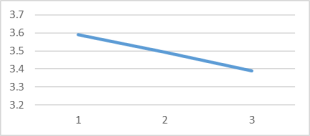
Figure 1. Mean number of customers in the system for different values of service rates.
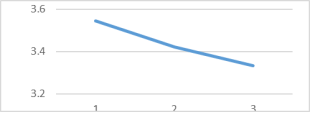
Figure 2. Mean number of customers in queue for different values of service rates.
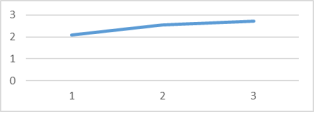
Figure 3. Variance for different values of service rates.
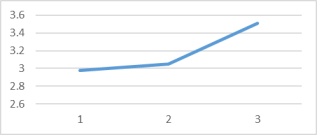
Figure 4. Mean number of customers in the system for different batch sizes.
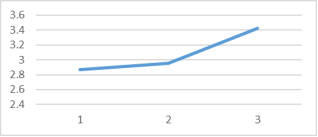
Figure 5. Mean number of customers in queue for different batch sizes.
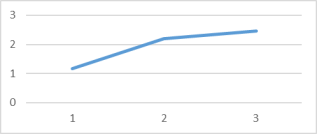
Figure 6. Variance for different batch sizes.
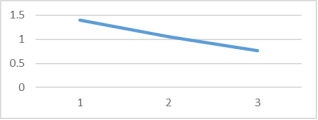
Figure 7. Mean number of customers in the system for different values of ν.
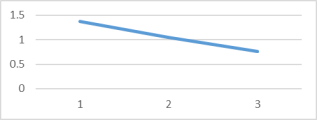
Figure 8. Mean number of customers in queue for different values of ν.
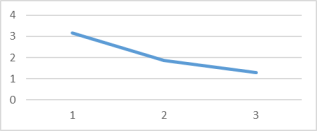
Figure 9. Variance for different values of ν.
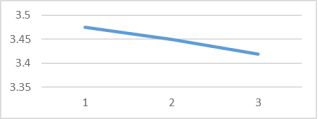
Figure 10. Mean number of customers in the system for different values of α.
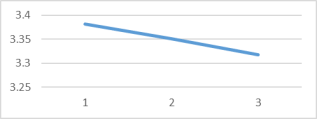
Figure 11. Mean number of customers in the queue for different values of α.
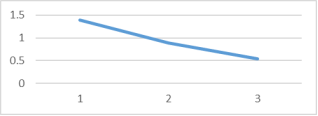
Figure 12. Variance for different values of α.

Information



 Share This Article
 Twitter
 Linked In
 Facebook

 Copy
 Download